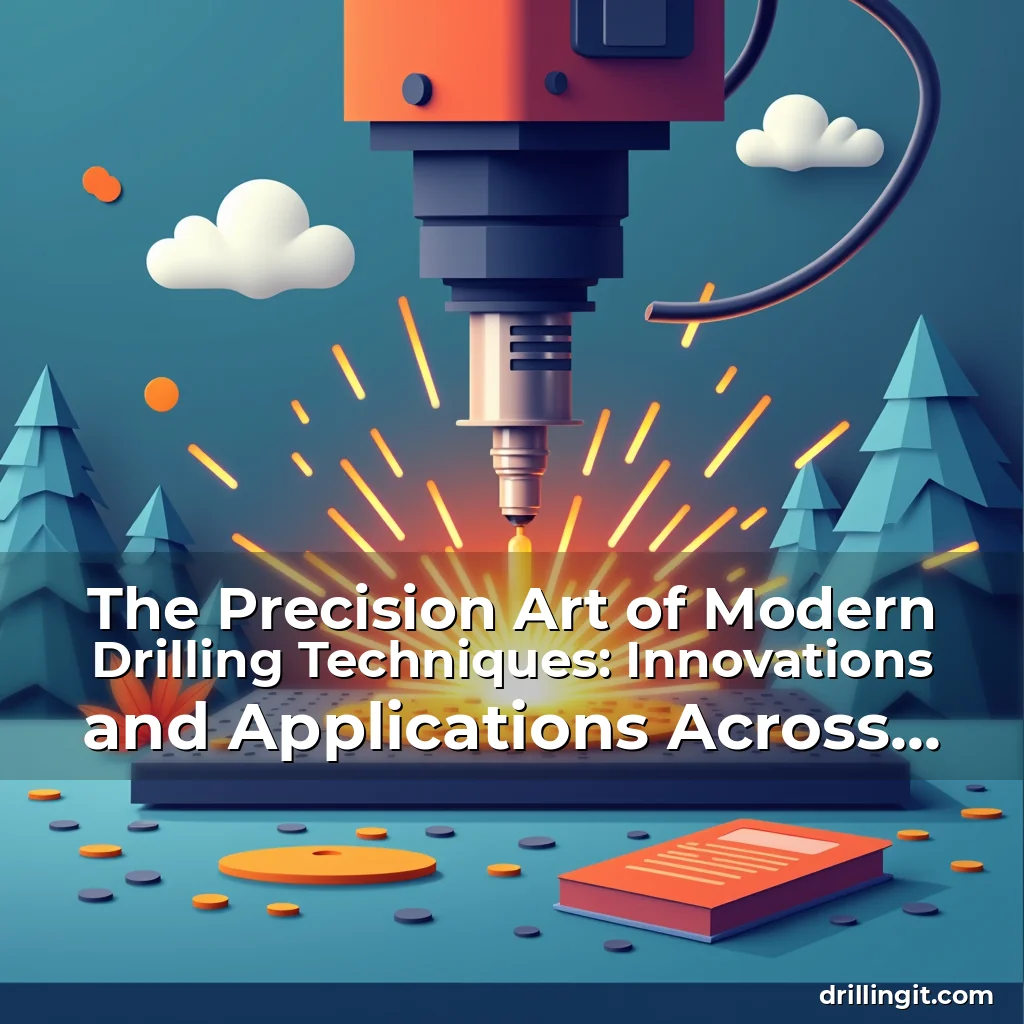
The Precision Art of Modern Drilling Techniques: Innovations and Applications Across Industries
In an era defined by technological advancement, drilling techniques have evolved from rudimentary manual processes to highly specialized operations that underpin modern infrastructure, energy production, and industrial manufacturing. Whether extracting oil from deep-sea reservoirs, constructing skyscrapers, or creating intricate microcomponents for electronics, the science behind drilling is as varied as its applications.
This exploration delves into the sophisticated methodologies, cutting-edge technologies, and practical considerations shaping contemporary drilling practices across diverse sectors. From the fundamentals of rotary drilling to advanced directional strategies, we uncover how precision engineering meets operational efficiency in today’s demanding environments.
Fundamentals of Rotary Drilling: The Workhorse of Industry
Rotary drilling remains the cornerstone technique in both land-based and offshore drilling operations due to its reliability and adaptability. This method involves rotating a drill bit at high speeds while simultaneously applying downward force to penetrate rock formations effectively.
The core components of a rotary drilling system include the drill string, which transmits rotational power from the surface rig down to the bit, and the mud circulation system responsible for cooling the bit, removing cuttings, and maintaining wellbore stability. These elements work synergistically to achieve optimal results in various geological conditions.
Rotary drilling operates through three primary mechanisms:
- Cutting action: The teeth or diamonds on the drill bit crush or shear rock material as they rotate, progressively enlarging the borehole diameter.
- Mud circulation: A continuous flow of drilling fluid, often referred to as’mud,’ lubricates the bit, carries away debris, and prevents formation collapse by stabilizing pressure within the wellbore.
- Weight application: Drill collars are used to apply sufficient weight-on-bit (WOB) to ensure efficient penetration without exceeding the mechanical limits of equipment or the integrity of surrounding strata.
Advancements in materials science have led to the development of ultra-hard composites such as polycrystalline diamond compact (PDC) bits, significantly enhancing durability and reducing downtime compared to traditional steel-tipped alternatives.
Modern monitoring systems equipped with sensors provide real-time data on parameters like torque, vibration, and rate of penetration, enabling operators to make dynamic adjustments that optimize performance and minimize wear on critical components.
Precision Engineering: Directional and Horizontal Drilling Innovations
As demand grows for resources located beneath complex geologies or environmentally sensitive areas, directional drilling has emerged as a transformative solution capable of accessing previously unreachable reserves with minimal surface disruption.
This technique allows engineers to steer the drill bit along predetermined paths using specialized tools known as downhole motors or bent subs. By adjusting inclination angles and azimuth directions, wells can be directed horizontally up to several kilometers from their initial entry points.
Directional drilling offers numerous advantages including:
- Maximized resource recovery: Multiple lateral branches can be created from a single vertical well, increasing exposure to hydrocarbon-bearing formations and improving extraction rates.
- Reduced environmental impact: Fewer access roads and surface facilities are required when compared to conventional drilling methods, preserving natural landscapes and minimizing habitat fragmentation.
- Enhanced safety: Offshore platforms benefit from reduced need for additional structures since horizontal wells can tap into multiple reservoir layers from a centralized location.
Innovative navigation technologies such as measurement-while-drilling (MWD) and logging-while-drilling (LWD) integrate gyroscopic sensors, magnetometers, and acoustic imaging devices to guide the drill bit accurately even in challenging subterranean environments.
Recent breakthroughs in automation have enabled semi-autonomous drilling systems that use predictive analytics based on historical data patterns combined with live telemetry feeds to adjust trajectories dynamically during operation.
Advanced Materials Science: Revolutionizing Bit Design and Durability
The evolution of drilling technology is closely tied to advancements in materials science, particularly in developing more resilient and longer-lasting drill bits suitable for extreme operating conditions found underground or underwater.
Titanium alloys, tungsten carbide, and synthetic diamonds now form the basis of next-generation drill bits designed to withstand temperatures exceeding 600°F and pressures measured in thousands of pounds per square inch (psi). These materials resist abrasion better than earlier versions while maintaining structural integrity over extended periods.
New composite materials offer distinct benefits such as:
- Polycrystalline Diamond Compacts (PDC): Combine synthetic diamond particles bonded together under intense heat and pressure to create extremely hard surfaces ideal for soft-to-medium hardness rocks.
- Thermally stable polycrystalline diamond (TSPD): Engineered specifically for high-temperature applications where thermal degradation would otherwise compromise tool effectiveness.
- Nanostructured ceramics: Utilize microscopic grain sizes to enhance resistance against fracture propagation caused by repeated stress cycles typical in prolonged drilling sessions.
Coatings applied via chemical vapor deposition (CVD) or physical vapor deposition (PVD) further extend service life by forming protective barriers against corrosion and abrasive particle damage.
Research into self-repairing nanomaterials continues at academic institutions worldwide, aiming eventually to produce drill bits that autonomously mend minor cracks before they escalate into catastrophic failures.
Digital Transformation: Integrating IoT and AI into Drilling Operations
The integration of Internet of Things (IoT) devices and artificial intelligence (AI) algorithms represents a paradigm shift in managing drilling activities efficiently while ensuring adherence to strict regulatory standards regarding safety protocols and environmental compliance.
Sensors embedded throughout rigs collect vast amounts of data related to temperature fluctuations, vibration levels, hydraulic pressures, and bit wear indicators. This information is transmitted wirelessly to central processing units where machine learning models analyze trends and predict potential malfunctions before they occur.
Applications of digital transformation include:
- Predictive maintenance scheduling: Algorithms identify patterns suggesting imminent component failure allowing technicians to replace parts preemptively rather than waiting for breakdown events.
- Real-time optimization: Dynamic control systems automatically adjust drilling parameters like RPM settings or WOB values based upon current performance metrics maximizing output without compromising equipment longevity.
- Remote supervision capabilities: Operators stationed remotely can monitor progress visually through augmented reality interfaces providing situational awareness comparable to being physically present onsite.
Data analytics also plays a crucial role in optimizing fuel consumption and reducing carbon footprints associated with heavy machinery usage thereby aligning industry goals with global sustainability initiatives targeting net-zero emissions targets set forth by international climate agreements.
Blockchain technology is increasingly being explored for secure tracking of raw materials sourced ethically along supply chains ensuring transparency from mining sites right through distribution networks reinforcing corporate social responsibility commitments undertaken by leading firms globally.
Eco-Conscious Practices: Sustainable Drilling Solutions for Future Generations
With growing public concern over ecological preservation efforts, the drilling sector must adopt greener approaches that mitigate negative impacts on ecosystems while still meeting commercial demands for extracted commodities.
One promising innovation involves utilizing biodegradable drilling fluids composed entirely of plant-derived compounds which dissolve harmlessly after completion eliminating long-term pollution risks traditionally posed by petroleum-based additives commonly used historically.
Other eco-friendly measures currently implemented include:
- Recycling programs: Companies invest heavily in reclaiming spent drilling muds containing valuable metals like barite or calcium carbonate which can then be reprocessed safely for reuse within new projects thereby conserving nonrenewable mineral deposits.
- Renewable energy sources: Solar panels integrated onto remote rig locations generate electricity powering essential functions reducing reliance solely upon fossil fuels typically consumed by diesel generators installed conventionally.
- Biodiversity conservation plans: Environmental assessments conducted prior commencing any excavation activity map out endangered species habitats facilitating relocation strategies that protect native wildlife populations affected indirectly by human intervention.
Carbon capture technologies are undergoing experimental phases aimed ultimately towards sequestering greenhouse gases released naturally during fracturing procedures trapping them permanently below ground instead releasing them into atmosphere contributing further toward climate change acceleration.
Collaboration between governmental bodies, private enterprises, and independent researchers accelerates development timelines necessary achieving widespread adoption among stakeholders committed fulfilling planetary boundaries established scientifically by meteorological organizations tracking atmospheric composition changes annually.
Specialized Applications: Tailoring Techniques for Unique Challenges
While general-purpose drilling solutions suffice adequately many scenarios encountered daily within construction trades or mining industries require customized approaches addressing singularly complex problems necessitating tailored responses developed collaboratively amongst multidisciplinary teams comprising geologists, engineers, and project managers alike.
For example, tunnel boring machines (TBMs) employed extensively civil engineering undertakings involve massive rotating wheels fitted with hardened steel segments designed precisely match geological profiles encountered sequentially advancing forward incrementally each cycle completed successfully.
Some niche applications benefiting greatly from bespoke methodologies include:
- Underground coal mining: Longwall miners utilize shearing actions facilitated by conveyor belts moving continuously alongside face ahead constantly retrieving mined material ensuring uninterrupted workflow despite fluctuating seam thicknesses encountered periodically.
- Geothermal energy extraction: Enhanced Geothermal Systems (EGS) employ hydraulic fracturing techniques similar those utilized shale gas operations but applied here deep below Earth’s crust injecting water into hot dry rock formations creating artificial reservoirs capable generating steam harnessed subsequently converting electrical power.
- Astronautical research: Planetary drills tested Mars rovers investigate subsurface ice deposits potentially vital sustaining future colonization missions analyzing soil samples collected systematically exploring compositional variations detected remotely beforehand.
In these instances, successful outcomes depend critically upon accurate site surveys preceded thorough risk evaluations followed implementation carefully planned execution sequences executed meticulously under stringent oversight provided jointly by technical experts field personnel coordinating seamlessly throughout entire duration involved.
Ongoing R&D investments continue pushing frontiers knowledge expanding repertoire available tools techniques applicable forthcoming challenges emerging horizon requiring adaptive capacities unprecedented scale magnitude previously unimaginable within confines existing paradigms governing profession universally recognized authoritative standard defining excellence benchmarks pursued relentlessly ceaselessly.
Educational Resources & Professional Development: Advancing Knowledge Through Learning
To maintain proficiency amidst rapidly evolving landscape characterized continual innovation, professionals engaged drilling sector must commit lifelong learning journeys acquiring updated skills sets matching requirements imposed ever-changing technological landscape dominating industry presently.
Academic institutions offer degree programs ranging associate certifications bachelor’s degrees master’s level qualifications doctoral studies focusing interdisciplinary fields combining mechanical engineering earth sciences computer science mathematics physics chemistry biology disciplines converging intersectionality cultivating holistic understanding phenomena occurring subterraneously superficially.
Recommended educational pathways include:
- Courses specializing in petroleum engineering: Cover fundamental principles governing reservoir characterization simulation modeling fluid dynamics transportation storage refining crude oils transforming raw resources usable forms beneficial society globally.
- Training modules focused on robotics: Teach programming languages software suites hardware configurations enabling deployment autonomous systems navigating confined spaces executing delicate maneuvers impossible manually achievable human operators constrained spatial limitations physical constraints.
- Workshops emphasizing sustainable practices: Provide hands-on experience implementing green technologies reducing ecological footprint promoting circular economy models recycling repurposing waste products minimizing landfill contributions negatively affecting environment adversely.
Industry associations regularly host symposiums conferences webinars disseminating latest research findings breakthrough discoveries best practice guidelines establishing networking opportunities connecting peers colleagues fostering collaborative spirit transcending geographical boundaries facilitating exchange ideas expertise accelerating collective progress exponentially surpassing individual achievements isolated silos operating independently disconnected contexts.
Continuing education credits earned participating professional development activities qualify individuals seeking promotions leadership roles within corporations pursuing strategic objectives aligned organizational vision mission statements guiding day-to-day operations steering enterprises towards prosperous futures secured enduring legacies impacting generations unborn yet.
Conclusion: Embracing Innovation for Continued Success
The realm of drilling techniques stands at a pivotal juncture marked by unprecedented advancements propelling industry into uncharted territories requiring agile adaptation embracing novel paradigms reshaping traditional norms governing age-old practices once considered immutable fixtures permanence.
By integrating state-of-the-art technologies, adopting environmentally conscious approaches, and committing to ongoing education, practitioners can navigate complexities inherent in modern drilling while ensuring safe, efficient, and sustainable outcomes that meet the needs of today and tomorrow’s world.
Whether you’re an experienced professional looking to refine your skillset or a newcomer eager to enter this dynamic field, staying informed and adaptable will be key to success in the ever-evolving domain of drilling techniques.