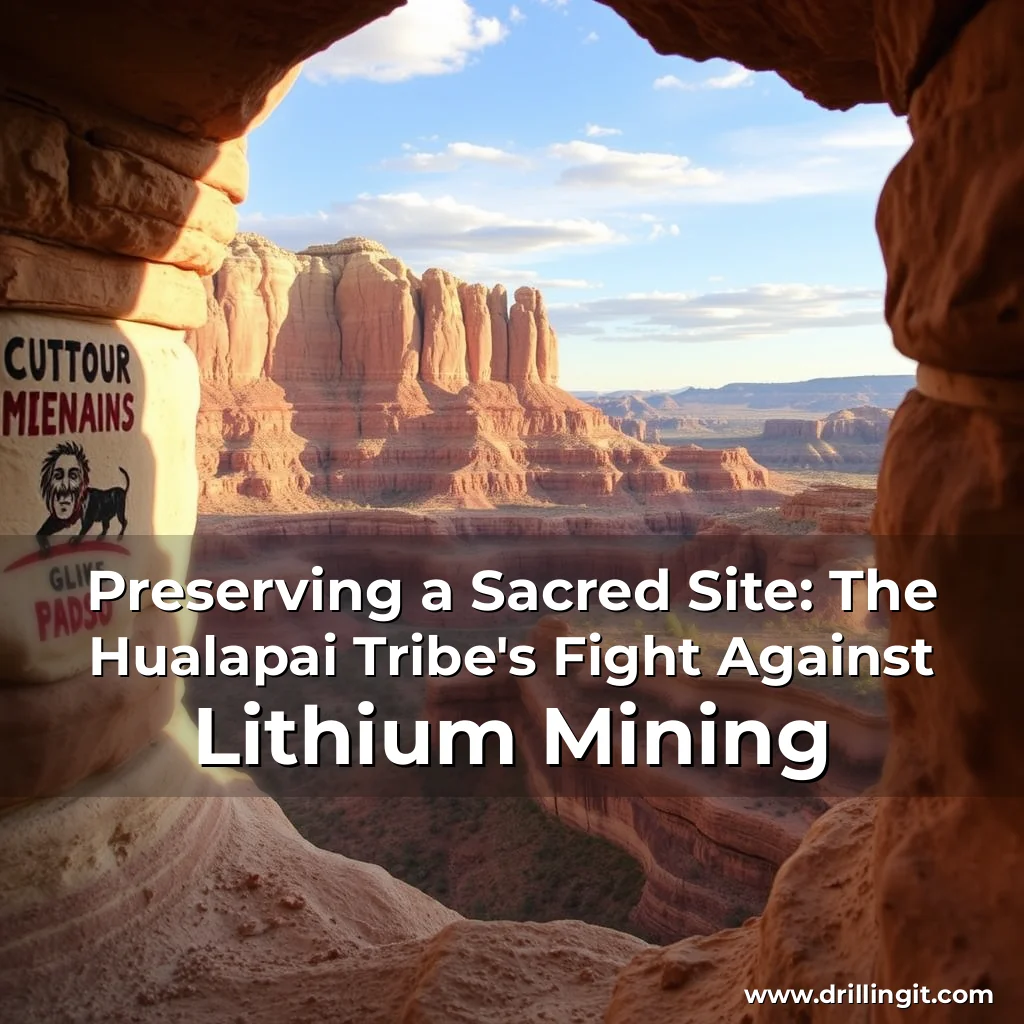
The Hualapai Tribe has long considered Ha’Kamwe’ a sacred site, a place where they connect with their land and ancestors to celebrate religious ceremonies and pass on traditional stories and songs. The tribe’s ancestral connection to the site dates back centuries, and they consider it a vital part of their cultural heritage.
A Threat to the Sacred Site
In 2019, Big Sandy Inc., the domestic subsidiary of the Australian company Arizona Lithium, began exploratory drilling in northern Arizona near Cofer Hot Springs, or Ha’Kamwe’ in Hualapai language. The site is rich in water, located in the Big Sandy River basin where the Mojave and Sonoran deserts meet. The drilling operation posed a significant threat to the tribe’s sacred site, and the Hualapai Tribe took issue with the Bureau of Land Management’s (BLM) approval of the project.
- The BLM approved the project despite the tribe’s concerns, classifying Ha’Kamwe’ as a Traditional Cultural Property eligible for listing on the National Register of Historic Places.
- The tribe argued that the BLM failed to omit Ha’Kamwe’ from the project’s impact area and did not initially consult the tribe.
- The BLM’s approval of the project also ignored the tribe’s request for mitigation measures to protect the site’s cultural and environmental significance.
A Lawsuit Filed Against the BLM
In 2024, the Hualapai Tribe filed a lawsuit against the BLM, arguing that the federal government violated the National Historic Preservation Act and the National Environmental Policy Act. The tribe claimed that the BLM failed to provide adequate mitigation measures for the drilling project and ignored the potential environmental impacts on the site.
Environmental Impacts
- The lithium drilling project could harm Ha’Kamwe’ water levels, temperature, and chemistry.
- The project could also permanently damage the aquifer feeding the Ha’Kamwe’ waters.
- The Hualapai Tribe hired an independent hydrologist to assess the project’s environmental impacts, which found that the drilling could irreparably harm Ha’Kamwe’.
A Preliminary Injunction
In November 2024, a judge converted the temporary restraining order against Big Sandy Inc. to a preliminary injunction, temporarily halting the drilling operation. The decision was seen as a significant victory for the Hualapai Tribe and other Tribal Nations, who have been fighting to preserve their ancestral lands.
| Key Findings: | • The lithium drilling project could harm Ha’Kamwe’ water levels, temperature, and chemistry. |
| Key Impacts: | • Permanent damage to the aquifer feeding the Ha’Kamwe’ waters. |
A Sign of Hope
The District Court’s decision was seen as a sign of hope for Tribal Nations fighting to preserve their ancestral lands. Ka-Voka Jackson, tribal historic preservation officer and director of the Hualapai Department of Cultural Resources, stated, “People were really happy for us… It was something that was echoed across different Nations.”
“It’s not just about Ha’Kamwe’, it’s about the thousands of other sacred sites and ancestral lands that are facing similar threats. We need to work together to protect these sites and ensure that future generations can connect with their heritage.”
As the Hualapai Tribe continues to fight for the preservation of Ha’Kamwe’, other Tribal Nations are taking notice and joining the cause.