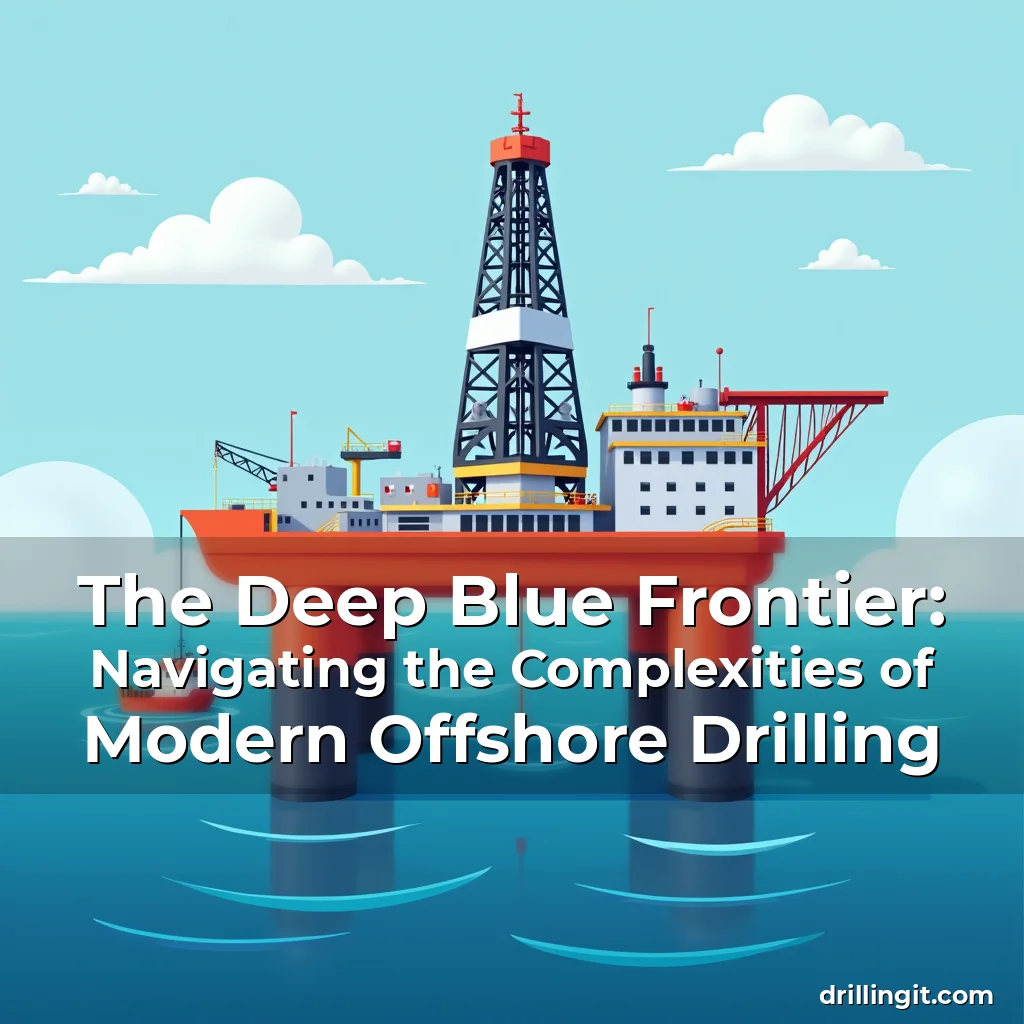
The Deep Blue Frontier: Navigating the Complexities of Modern Offshore Drilling
In an era where energy demands continue to surge, offshore drilling emerges as both a lifeline and a labyrinth of challenges. This intricate practice involves extracting hydrocarbons from beneath the ocean floor, leveraging advanced technology to tap into vast reserves that lie miles below the surface.
The global shift towards sustainable practices has intensified scrutiny over traditional extraction methods, making the balance between economic necessity and environmental stewardship increasingly delicate. As nations strive for energy independence, the complexities surrounding offshore operations demand meticulous attention.
Understanding the Basics of Offshore Drilling
At its core, offshore drilling is a sophisticated endeavor involving specialized platforms designed to withstand harsh marine environments while facilitating resource extraction. These platforms serve as bases for various activities essential to oil and gas production, including well drilling, completion, and maintenance.
The primary objective of offshore drilling is to access oil and natural gas deposits located under layers of sediment and rock within the seabed. To achieve this goal, operators must employ cutting-edge technologies capable of functioning at extreme depths and pressures.
Modern offshore rigs are equipped with state-of-the-art systems such as blowout preventers, which are crucial for preventing uncontrolled release of fluids during drilling operations. Additionally, these facilities often incorporate automated control systems to enhance safety and efficiency.
The process begins with geophysical surveys conducted using seismic imaging techniques that map subsurface structures. This preliminary step helps identify potential reservoirs before any physical exploration takes place.
Once viable targets have been identified through survey data, exploratory wells are drilled to confirm the presence and viability of hydrocarbon resources. This phase requires precise engineering solutions tailored to the unique conditions encountered at sea.
Technological Innovations:
- Autonomous Underwater Vehicles (AUVs): Utilized for mapping the seafloor and conducting inspections without direct human intervention, AUVs significantly reduce operational risks associated with deep-sea missions.
- Digital Twin Technology: Creating virtual replicas of drilling sites allows engineers to simulate scenarios and optimize processes prior to actual implementation, enhancing predictive capabilities and reducing downtime.
- Advanced Robotics: Robotic arms and manipulators enable remote handling tasks critical for maintaining equipment integrity and performing complex repairs underwater.
- Data Analytics Platforms: Leveraging big data analytics enables real-time monitoring and decision-making based on continuous streams of information collected from sensors deployed across the rig.
Economic Implications of Offshore Drilling
The financial landscape of offshore drilling is multifaceted, encompassing significant capital investments alongside substantial revenue generation opportunities. Companies involved in this sector typically require billions of dollars upfront to develop new projects due to high initial costs associated with platform construction, installation, and operation.
Despite these hefty investment requirements, successful offshore ventures can yield considerable returns over time. The strategic positioning near prolific oil fields can translate into long-term profitability as markets fluctuate according to supply-demand dynamics.
A key factor influencing economic outcomes includes geopolitical stability; regions experiencing political unrest may pose heightened risks for investors considering offshore expansion initiatives.
Countries rich in offshore reserves benefit economically by becoming net exporters of crude oil and liquefied natural gas (LNG), thereby bolstering their national economies through foreign exchange earnings.
Moreover, local communities adjacent to active drilling zones experience job creation benefits ranging from skilled labor positions aboard vessels to support roles ashore managing logistics and administrative functions.
However, there exists a paradoxical relationship wherein reliance upon fossil fuel revenues might hinder diversification efforts aimed at fostering broader-based economic development strategies resistant to market volatility.
Environmental Considerations in Offshore Operations
As awareness grows regarding climate change impacts linked primarily to greenhouse gas emissions generated from burning petroleum products, stakeholders face mounting pressure to adopt greener alternatives while still meeting current energy needs.
Marine ecosystems remain particularly vulnerable to disruptions caused by drilling activities, necessitating stringent regulations governing waste disposal protocols and chemical usage standards applicable to all phases of operation.
Oil spills represent one of the most catastrophic environmental hazards tied closely with offshore exploration endeavors. Historically infamous incidents such as the Exxon Valdez disaster underscored dire consequences resulting from inadequate containment measures against accidental releases.
Contaminants introduced into aquatic habitats via discharges from drilling muds and cuttings threaten biodiversity levels along coastlines and open waters alike. Consequently, regulatory bodies impose rigorous guidelines concerning permissible limits for pollutants entering waterways.
To mitigate ecological damage, many companies now invest heavily in spill response preparedness programs featuring rapid deployment capabilities utilizing booms, skimmers, and absorbent materials specifically engineered for swift cleanup actions post-disaster events.
Additionally, innovative approaches focusing on carbon capture utilization storage (CCUS) technologies aim at minimizing atmospheric CO₂ concentrations produced during combustion cycles by capturing emitted gases then either storing them underground or repurposing them industrially.
Regulatory Framework Governing Offshore Activities
Nation-states establish legal frameworks dictating how entities conduct business within territorial waters extending beyond landmasses into exclusive economic zones (EEZs). Such legislation aims at ensuring responsible exploitation aligned with international treaties ratified by signatories participating globally.
International agreements like the United Nations Convention on Law of Sea (UNCLOS) provide foundational principles guiding maritime boundaries delineation and resource allocation mechanisms among coastal states vying for jurisdictional claims over submerged territories.
Within domestic contexts, agencies tasked with overseeing offshore industries implement technical specifications covering everything from structural design criteria for floating installations to emergency evacuation procedures mandated during crisis situations.
Compliance with these mandates ensures adherence to best practices promoting worker safety while simultaneously protecting fragile marine environments susceptible to degradation from improper management tactics.
Fines imposed upon non-compliant organizations act as deterrents encouraging proactive compliance behaviors rather than reactive remediation attempts following infractions detected late-stage after violations occur.
Transparency initiatives requiring disclosure of environmental impact assessments facilitate public engagement enabling informed discourse around proposed developments affecting shared natural heritage assets.
Safety Protocols Ensuring Operational Integrity
Maintaining unwavering commitment toward occupational health remains paramount within hazardous working conditions inherent to offshore drilling pursuits. Comprehensive training regimens prepare personnel adequately for unpredictable emergencies arising suddenly amidst routine duties.
Emergency drills simulating scenarios involving fires, explosions, or toxic substance leaks reinforce readiness among crew members who must respond swiftly under duress when unexpected crises unfold rapidly without warning signs preceding occurrences.
Vital life-support infrastructure components include enclosed escape pods configured for immediate evacuation transports once danger thresholds exceed tolerable exposure parameters set forth within standardized safety codes.
Rigorous inspection schedules ensure mechanical failures do not compromise system functionalities vital for sustaining operations safely until scheduled decommissioning phases commence later down the line.
Predictive maintenance algorithms analyze sensor outputs identifying wear patterns indicative of impending breakdowns allowing preemptive interventions avoiding unplanned outages disrupting service continuity commitments made publicly ahead of time.
Cross-training modules empower multi-functional teams adeptly switching roles fluidly depending upon evolving situational needs demanding flexible adaptability traits essential for thriving amid dynamic uncertainties present throughout extended deployments spanning months together continuously.
Future Prospects & Technological Advancements
Looking forward, emerging trends signal transformative shifts poised to redefine conventional paradigms currently dominating offshore industry landscapes. Integration of artificial intelligence applications promises enhanced automation levels streamlining workflow efficiencies previously constrained manually intensive labor inputs.
Quantum computing breakthroughs may soon revolutionize geological modeling accuracy permitting unprecedented clarity visualizing subterranean formations accurately enough predicting optimal locations warranting targeted excavation campaigns yielding higher productivity metrics compared historically achieved benchmarks.
Collaborative robotics networks could replace solitary machines executing singular tasks independently instead coordinating collective efforts synergistically achieving objectives faster collectively than individually accomplish separately apart from groupings formed purposefully intended collaboration.
These innovations suggest that future generations stand poised to witness dramatic changes reshaping entire sectors reliant upon traditional methodologies employed hitherto exclusively defining past accomplishments attributable solely prior technological limitations inhibiting progress aspirations envisioned optimistically yet unrealized practically until recent developments catalyze paradigmatic transitions accelerating adoption rates exponentially surpassing previous growth trajectories witnessed formerly.
Nevertheless, ethical considerations arise concerning employment displacement possibilities stemming from widespread mechanization replacing human workforce contributions traditionally central pillars supporting organizational hierarchies established conventionally entrenched deeply rooted societal norms conditioning expectations about work-life balances maintained consciously deliberately cultivated carefully curated consistently upheld universally accepted standards across diverse cultures interacting harmoniously coexisting peacefully sharing common ground mutually respecting differences existing naturally inherently part fabric civilization itself.
Conclusion
Offshore drilling stands at a crossroads, balancing the urgent need for energy with growing concerns about sustainability and environmental protection. Its role in shaping modern economies cannot be overstated, but neither can the responsibilities it entails toward preserving our oceans.
By embracing innovation responsibly—prioritizing safer technologies, stricter regulations, and transparent communication—we can navigate this complex terrain wisely. Future success hinges not merely on what we extract but also on how we do so ethically and sustainably for generations yet unborn.