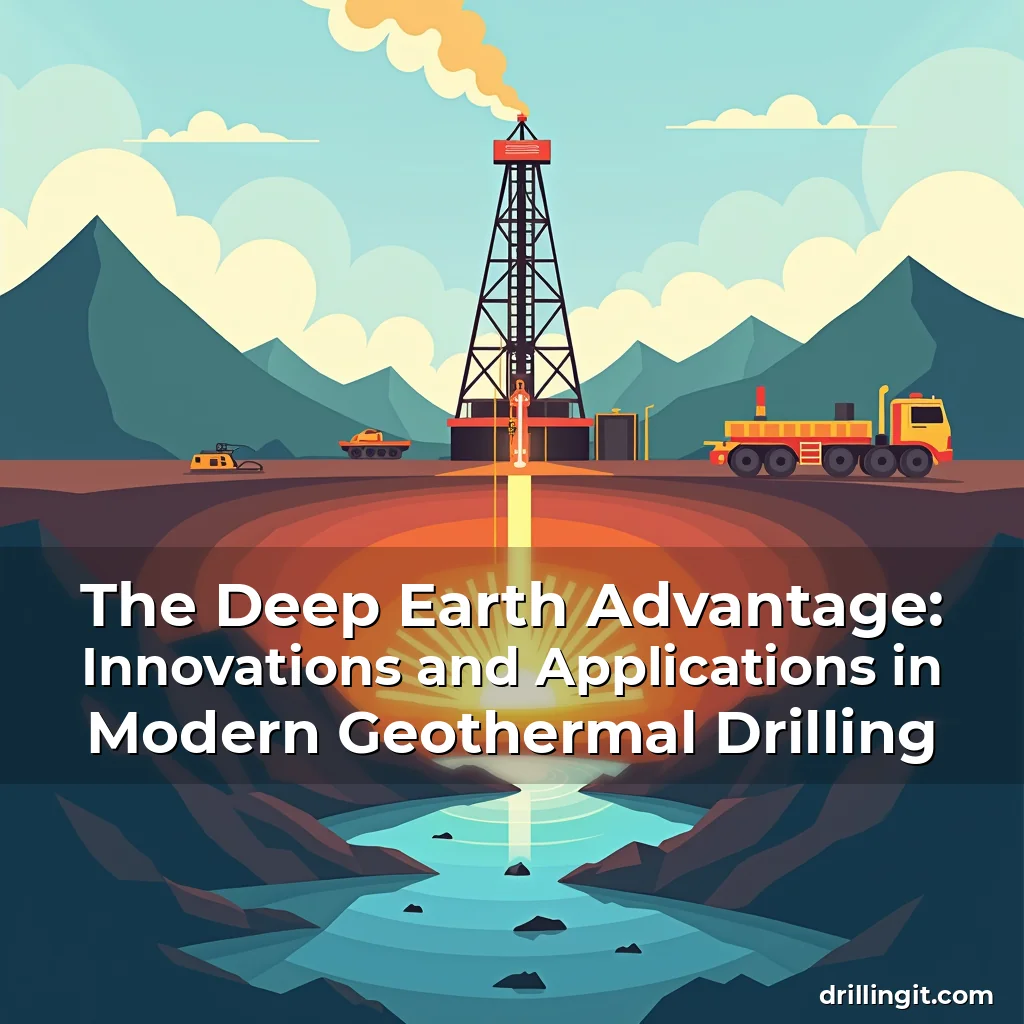
The Deep Earth Advantage: Innovations and Applications in Modern Geothermal Drilling
As global demand for sustainable energy sources continues to rise, geothermal drilling has emerged as a cornerstone of renewable energy production. Unlike conventional methods that rely on fossil fuels, geothermal systems harness the planet’s internal heat to generate electricity and provide heating solutions. This technology not only offers environmental benefits but also presents new opportunities for technological innovation.
Modern geothermal drilling techniques are rapidly evolving, driven by advancements in materials science, seismic monitoring, and data analytics. These developments enable more efficient exploration, safer operations, and reduced environmental impact. Understanding these innovations is essential for professionals in the drilling industry seeking to stay ahead in this dynamic field.
Understanding Geothermal Energy Systems
At its core, geothermal energy derives from the natural heat stored within the Earth’s crust. This heat originates from radioactive decay processes deep underground and residual heat from the planet’s formation. The potential for geothermal energy lies primarily in regions where tectonic activity creates accessible thermal reservoirs.
There are three primary types of geothermal power plants: dry steam, flash steam, and binary cycle. Dry steam plants use high-pressure steam directly from underground reservoirs to drive turbines. Flash steam plants operate by reducing pressure on hot water, causing some of it to vaporize and spin turbine blades. Binary cycle plants utilize heat transfer between two fluids without direct contact, making them ideal for lower temperature resources.
The efficiency of a geothermal system depends heavily on several factors including subsurface temperatures, fluid availability, and geological stability. Regions near volcanic activity such as Iceland, Indonesia, and parts of California offer optimal conditions due to their proximity to magma chambers which maintain consistently high temperatures at shallow depths.
Drilling Technologies Revolutionizing the Industry
Traditional rotary drilling methods have been supplemented by advanced technologies designed specifically for geothermal applications. One significant advancement involves directional drilling capabilities that allow operators to access inclined or horizontal reservoir formations previously considered inaccessible.
Innovative drill bit designs now incorporate diamond impregnated bits capable of cutting through hard rock formations commonly encountered during deep well construction. Additionally, enhanced casing systems protect against extreme temperatures while maintaining structural integrity over extended periods.
- Dual-pipe drilling: This technique employs two concentric pipes allowing simultaneous circulation of cooling fluids and extraction of cuttings, significantly improving operational efficiency.
- Thermal barrier coatings: Specialized ceramic layers applied to drill strings help mitigate damage caused by prolonged exposure to high temperatures typical in geothermal environments.
Automation plays an increasingly vital role in modern geothermal projects. Real-time telemetry systems monitor parameters such as torque, weight-on-bit, and downhole vibrations continuously transmitting data back to surface control units. These insights enable predictive maintenance strategies minimizing unexpected downtime.
Environmental Considerations and Mitigation Strategies
While geothermal energy provides numerous sustainability advantages compared to traditional energy sources, it is not without ecological challenges. Fluid withdrawal can lead to land subsidence or depletion of aquifers if managed improperly. Proper resource management practices ensure long-term viability without compromising local ecosystems.
Seismic risk assessment remains critical when selecting suitable sites for geothermal development. Advanced microseismic monitoring networks detect subtle ground movements indicating possible fault reactivation risks associated with injection activities. Proactive mitigation measures include controlled flow rates and strategic placement of injection wells away from active fault lines.
Sustainable Practices in Operation
Recent studies indicate that closed-loop reinjection systems reduce surface disturbances by up to 80% compared to open-system approaches. By recycling used fluids back into depleted reservoirs under pres
Implementation of low-emission drilling rigs equipped with electric drives instead of diesel engines further reduces carbon footprints associated with site preparation phases. These hybrid models demonstrate improved fuel efficiency while complying with stringent emissions regulations across various jurisdictions.
Economic Viability and Cost Analysis
The initial capital investment required for geothermal projects often deters potential investors despite long-term economic benefits. However, recent improvements in drilling equipment longevity and operational efficiencies have begun shifting cost structures favorably toward project developers.
Data from the International Renewable Energy Agency shows that levelized costs for geothermal electricity generation range between $0.04-$0.12/kWh depending on location-specific factors. In comparison, coal-fired plants typically require $0.06-$0.14/kWh whereas natural gas ranges from $0.03-$0.09/kWh highlighting competitive pricing positions available through geothermal initiatives.
Ongoing research focuses on optimizing plant performance metrics via AI-driven predictive modeling tools which forecast maintenance needs accurately before failures occur. Such proactive approaches contribute substantially towards extending asset lifespans thereby enhancing overall return on investments made initially.
Global Case Studies and Regional Success Stories
Iceland serves as a prime example demonstrating successful integration of geothermal resources into national grids supplying nearly 90% of residential heating requirements annually. Their extensive network includes over 600 MW capacity dedicated solely to geothermal electricity generation showcasing remarkable scalability achieved through continuous technological upgrades since early 20th century implementations.
Indonesia’s Wayang Windu Power Plant represents another notable achievement utilizing binary cycle technology effectively even amidst relatively modest ambient temperatures characteristic of tropical climates. With capacities reaching approximately 120 MW currently operating successfully since mid-1980s illustrates resilience offered by adaptable engineering solutions tailored uniquely according to regional characteristics.
Future Trends and Emerging Technologies
Research institutions worldwide are exploring novel methods aimed at expanding current geothermal accessibility thresholds notably focusing on Enhanced Geothermal Systems (EGS). EGS technology seeks to create artificial reservoirs by injecting water into hot dry rock formations enabling utilization of otherwise untapped subterranean heat sources globally irrespective geographical limitations.
Advancements in nanotechnology promise transformative changes particularly regarding borehole insulation properties and chemical interactions occurring within complex mineralogical compositions found beneath earth surfaces. Nanoparticles engineered specifically could potentially enhance fluid conductivity rates dramatically increasing energy recovery percentages achievable from existing installations.
Artificial intelligence combined with machine learning algorithms stand poised revolutionize how we approach exploratory drilling missions altogether. Predictive analytics models trained upon vast datasets encompassing historical seismic events alongside geochemical signatures facilitate identification patterns invisible human interpretation alone might overlook thus accelerating discovery timelines considerably.
Challenges Facing the Geothermal Sector Today
Despite promising prospects laid out above certain obstacles persist hindering widespread adoption especially among developing economies lacking adequate financial infrastructure necessary support large scale deployments. High upfront costs coupled uncertainty surrounding long term profitability pose considerable deterrents discouraging private sector participation unless substantial subsidies exist.
Regulatory frameworks vary drastically amongst countries creating inconsistent standards complicating cross-border collaboration efforts aimed at standardization protocols beneficial entire international community engaged renewable energies sectors broadly speaking. Harmonizing legislation becomes imperative goal ensuring equitable growth trajectories across diverse geopolitical landscapes.
Talent shortages represent third major hurdle facing expansion plans particularly skilled workforce proficient latest digital transformation trends applicable contemporary drilling methodologies. Upskilling programs targeting emerging fields must accelerate pace matching rapid rate technological progressions unfolding simultaneously elsewhere globe.
Conclusion
Geothermal drilling stands at the forefront of sustainable energy innovation offering reliable clean alternatives conventional power generation options. As demonstrated throughout this discussion myriad technical breakthroughs continue pushing boundaries what once deemed unattainable feasible realities today.
For those invested future energy markets embracing geothermal solutions represents prudent strategy aligning business objectives environmental stewardship principles concurrently. Continued R&D funding directed towards refining present technologies unlocking new frontiers will undoubtedly shape tomorrow’s landscape significantly influencing global transition cleaner energy paradigms permanently.
“`