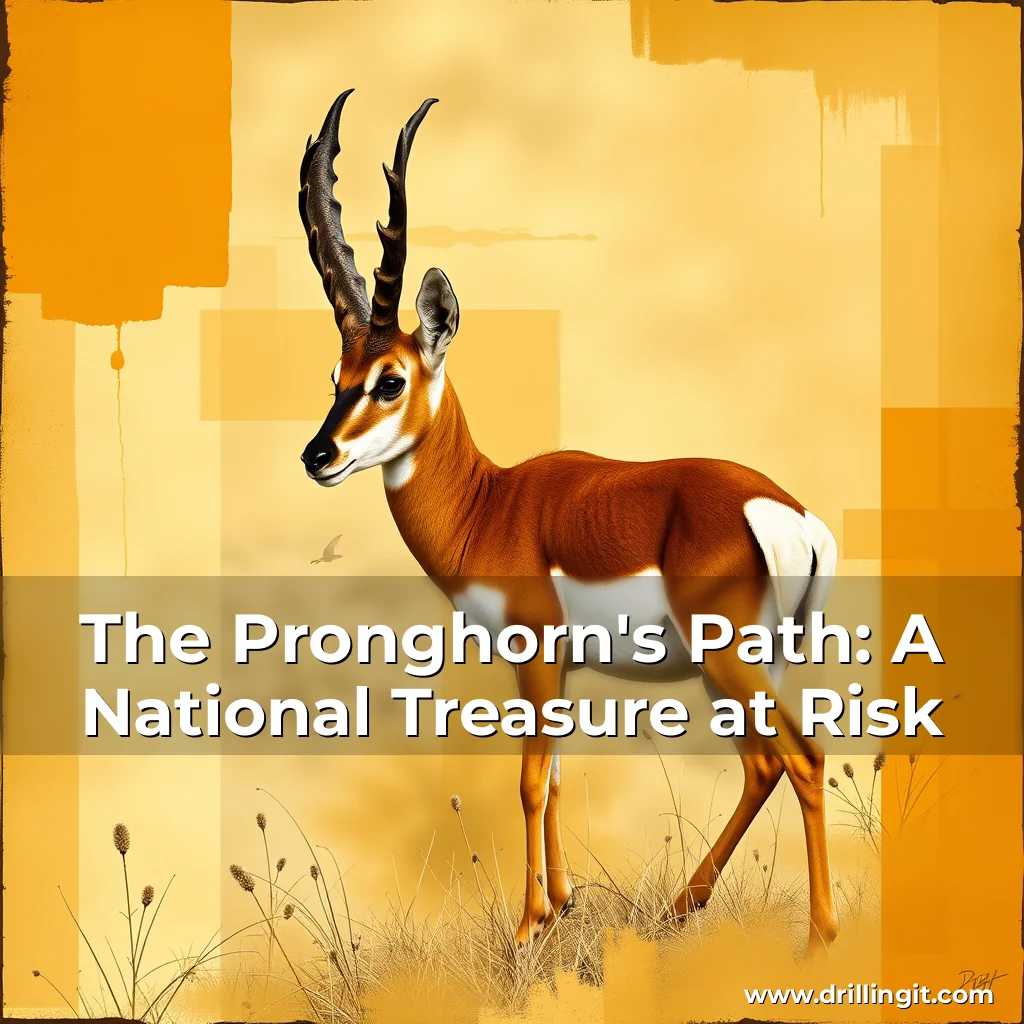
The Importance of Protecting the Path of the Pronghorn
The Sublette antelope herd is a national treasure, and its “Path of the Pronghorn” migration route should be officially designated and protected, a wildlife biologist said. However, that shouldn’t be done at the cost of shutting down oil and gas leases in the area, an energy landman countered. The Path of the Pronghorn is a vital migration route running between summer range in the Grand Teton area to winter range in the Red Desert. This route is crucial for the survival of the Sublette pronghorn herd, which is considered a national and international wildlife resource of significance.
- Thousands of antelope migrate along this route each year, and leaving it unprotected could have huge consequences for the herd and the ecosystem as a whole.
- The Sublette pronghorn herd is less resilient today due to declines in habitat quality, development with barriers to movement, climatic volatility, and other factors.
A Balance Between Conservation and Energy Development
However, there is a concern that designating the Path of the Pronghorn as an official migration route would prompt federal agencies to shut down oil and gas leases in the area. This could have significant consequences for the state’s economy, which relies heavily on oil and gas revenues. Studies have shown that antelope will go out of their way to avoid energy sites and other development. However, energy landman Steven Degenfelder argues that horizontal drilling technology allows energy extraction while keeping the antelope’s path clear.
| Drilling Distance | Current Technology | Potential Future Distance |
|---|---|---|
| Two miles | Current drilling infrastructure is roughly two miles away from the extraction site. | Four miles (experimental method) |
Protecting the Path of the Pronghorn
Wildlife biologist Rich Guenzel emphasizes the need to maintain the full pathway, not just noncontiguous segments. He is concerned that the Sublette Pronghorn Herd could be lost if the migration route is not fully protected. “I am concerned that this amazing migration from Grand Teton National Park down to Interstate 80 could be lost, as well as maintaining the Sublette Pronghorn Herd at publicly desired levels,” Guenzel said.
The Role of Horizontal Drilling Technology
Horizontal drilling technology is seen as a potential solution to balancing conservation and energy development. By keeping the antelope’s path clear, energy companies can extract oil and gas while minimizing disruption to the herd. However, Degenfelder notes that the main route of migration continues to go through an area with dense drilling activity. He argues that this suggests that antelope will go out of their way to avoid energy sites and other development.
Leases Are Vital for Energy Development
Degenfelder emphasizes the importance of leases for energy development. If leases are restricted in the area, energy companies might go seek leases in other states, which could have significant consequences for the state’s economy. “The leasing of these areas is a significant part of our state’s budget, including funds for wildlife research studies,” Degenfelder said.
The Time Is Now
The Wyoming Game and Fish Commission will soon decide whether to start the process of designating the Path of the Pronghorn as an officially-recognized wildlife migration route. Guenzel urges the public to let Gov. Mark Gordon know that they want him to designate the Sublette antelope migration corridor. “The designation is needed as soon as possible given the recent presidential order sunsetting federal agencies’ regulations governing energy production,” Guenzel said.
The Next Steps
The matter will go before the Wyoming Game and Fish Commission for consideration during its July meeting. The commission will then make a recommendation to Gov. Mark Gordon, who will appoint a working group to delve into the details. If the recommendation is to proceed, the working group will make a final recommendation to Gordon, whether to designate the Path of the Pronghorn. Even if the designation goes through, it would apply only to the parts of the Path of the Pronghorn that go through public land.
“Pronghorn populations are less resilient today, given declines in habitat quality, substantial development with barriers to movement, climatic volatility, and other factors,” said Guenzel. “Pronghorn are not antelope, they are a separate species that deserves our protection and conservation efforts,” Guenzel added.
The future of the Sublette antelope herd and the Path of the Pronghorn migration route hangs in the balance. The outcome of the designation process will have significant implications for conservation, energy development, and the state’s economy.